PimSpace designs and builds custom software for Australian businesses and founders that need a specialised app: mobile apps for iOS and Android, SaaS tools and web apps, and the AI agents and integrations inside them. In English and Mandarin, from Sydney.
Apps for iOS and Android, from initial concept to production deployment.
SaaS tools and web apps
Web apps and multi-tenant SaaS, built to run in production.
AI agents and integrations
RAG, tool-calling agents and workflow automation inside the product, connected to the systems you already use.
How we build: the AI software factory
Giving developers an AI assistant does not make a business faster. The operating model does. Ours is a software factory: a team of AI agents, each with one job, moves every feature round the same loop, and a person makes the calls that matter. That is how we ship in weeks what used to take months, without cutting corners on quality or security.
01
Spec
Every job starts as a written spec, with the checks that will prove it works. No spec, no build.
02
Build
A builder agent writes the code in its own workspace, in small steps it commits one at a time.
03
Review
A different agent, on a different model, reviews every change. No agent marks its own work.
04
Verify
A verifier agent runs the real app, checks each point in the spec and records the evidence.
05
Ship
Green checks merge on their own. A person approves anything that touches production or money.
06
Learn
Every miss becomes a rule the next run starts with. Shipping is one stop on the loop, not the end of it.
What the factory runs on
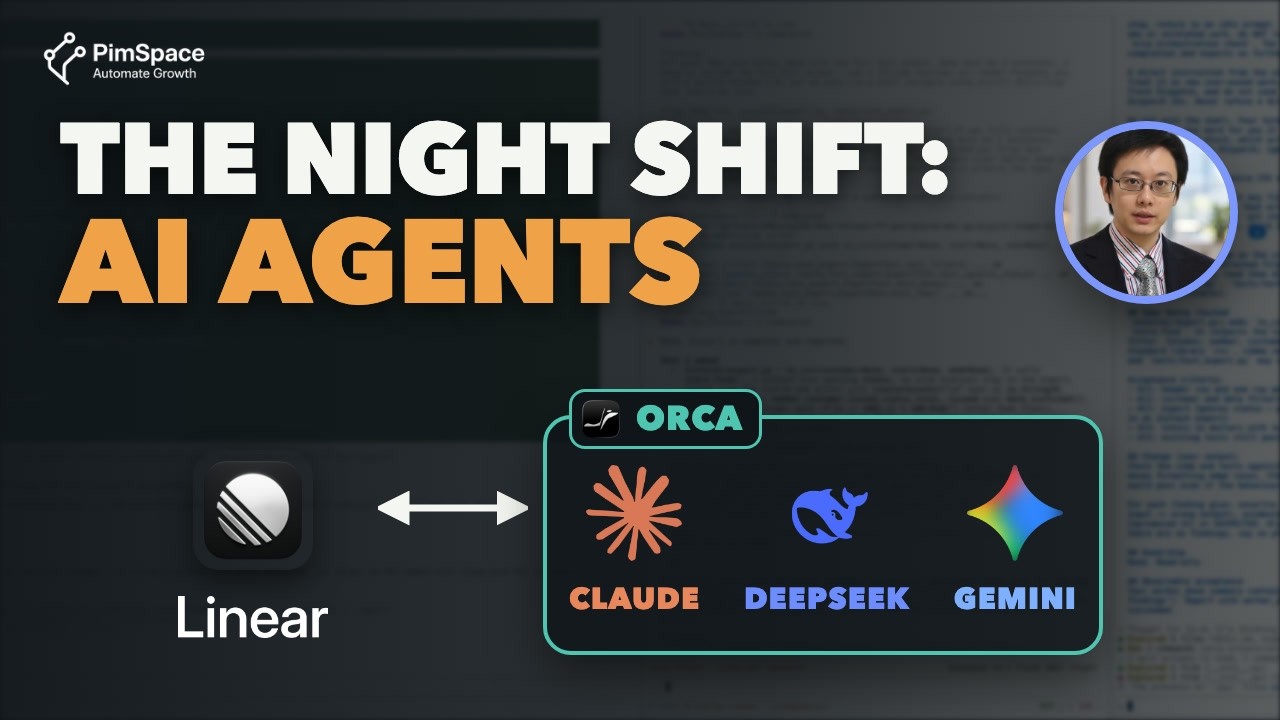
Linear
The order book. Every job is a ticket with a spec.
Orca
The factory floor. Agents work side by side, each in its own workspace.
Claude, Codex, Gemini, Droid
The agent team. They plan, build, review and verify, and a different model checks each piece of work.
GitHub
The quality gate. Nothing merges until the checks pass.
A person
Decisions reach George's phone. One tap, and the line moves again.
In our pilot, a new feature went from ticket to done in two and a half hours, with one human click.
Five systems George Qiao designed and built end to end. They are PimSpace's own products, not client work, and they show what the factory delivers. Three are open source.
Launch film. The restaurant is a demo; the voice and lifestyle shots are AI-generated.
Restaurant SaaS
OrderTogether
Guests scan the table's QR code and order together from their own phones, in their own language. Every phone updates live, and one tap sends the round to the kitchen screen.
How it works
Each guest can change only their own unsent items. Staff void an item with a reason, answer help calls from the floor view, and close the table on every phone at once. Each restaurant sees only its own data.
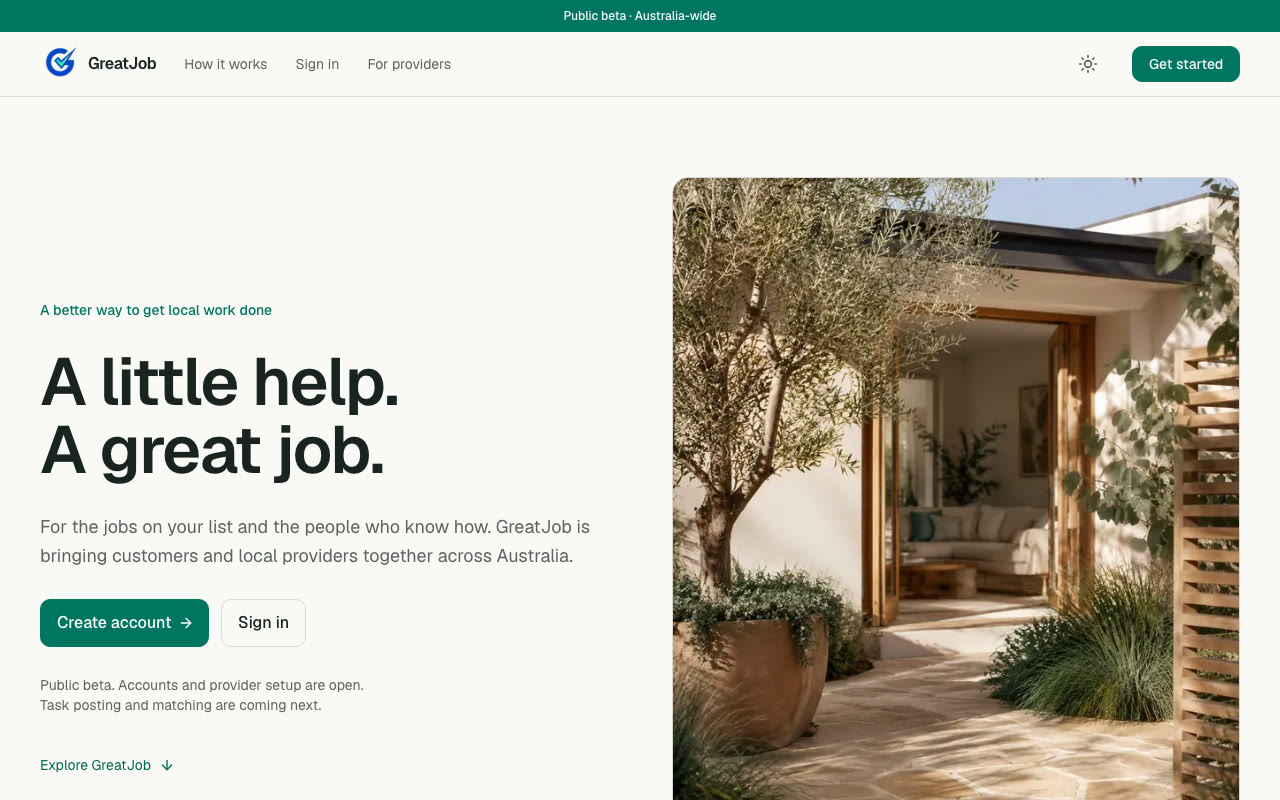
Public home of the beta build. For now, greatjob.au takes launch sign-ups.
Two-sided marketplace
GreatJob
Customers describe a job and get up to three quotes from local providers, free. They pay through a protected payment, and the provider is paid once the work is done.
How it works
Providers pay only when they earn, and rebooking the same provider costs less than the first job. Refunds and disputes are decided by a person, with an audit trail.
Recorded demo. Messages are sample FMCG complaints, not a live queue.
Real-time systems
Care Desk Live
A customer message lands in MongoDB. A change stream wakes a worker. Jev makes four judgments in about 300 ms, and a second change stream paints the verdict on every open screen. Nothing polls.
How it works
The card shows up as "Jev is reading", then gets a topic, a mood, an urgency, and a safety flag. A safety line becomes an escalation without a refresh.
Demo school. The names on the packing board are synthetic.
In production
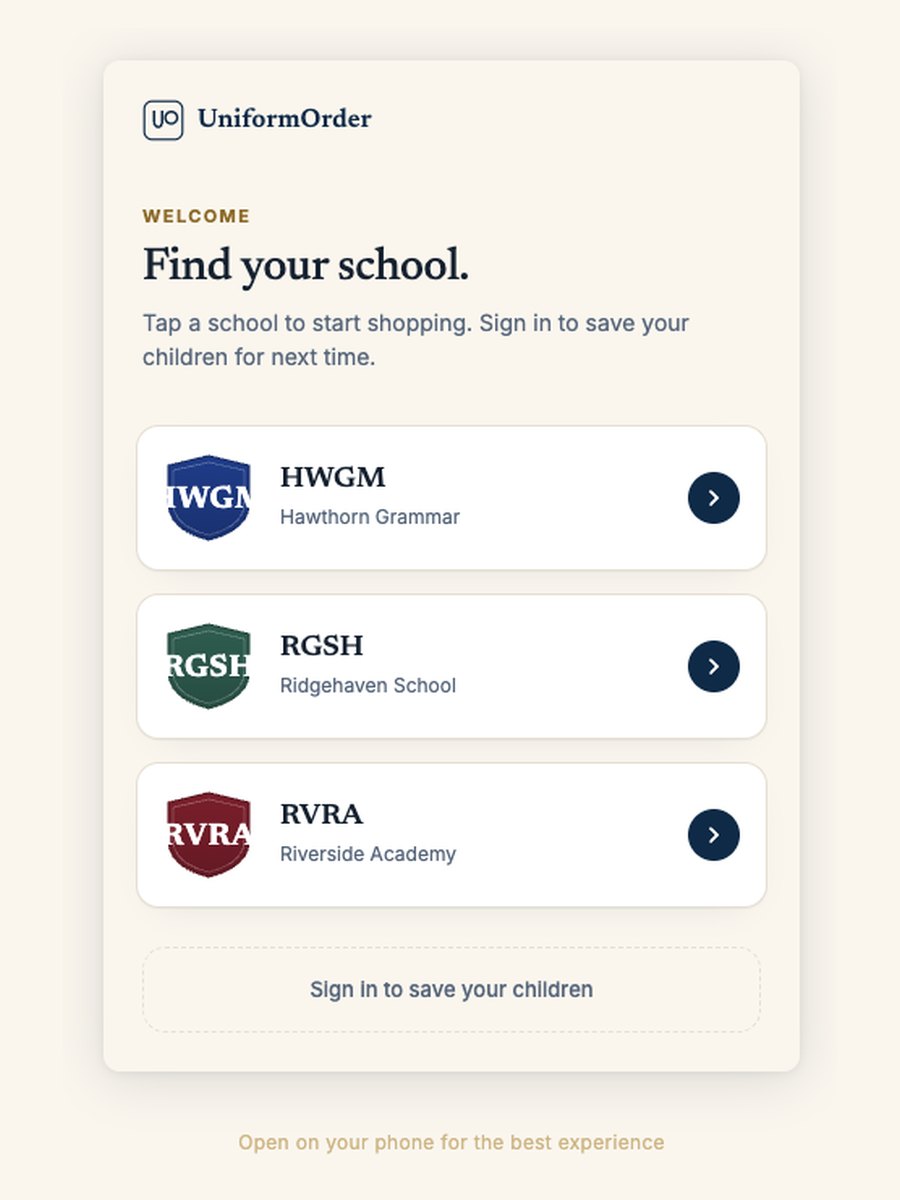
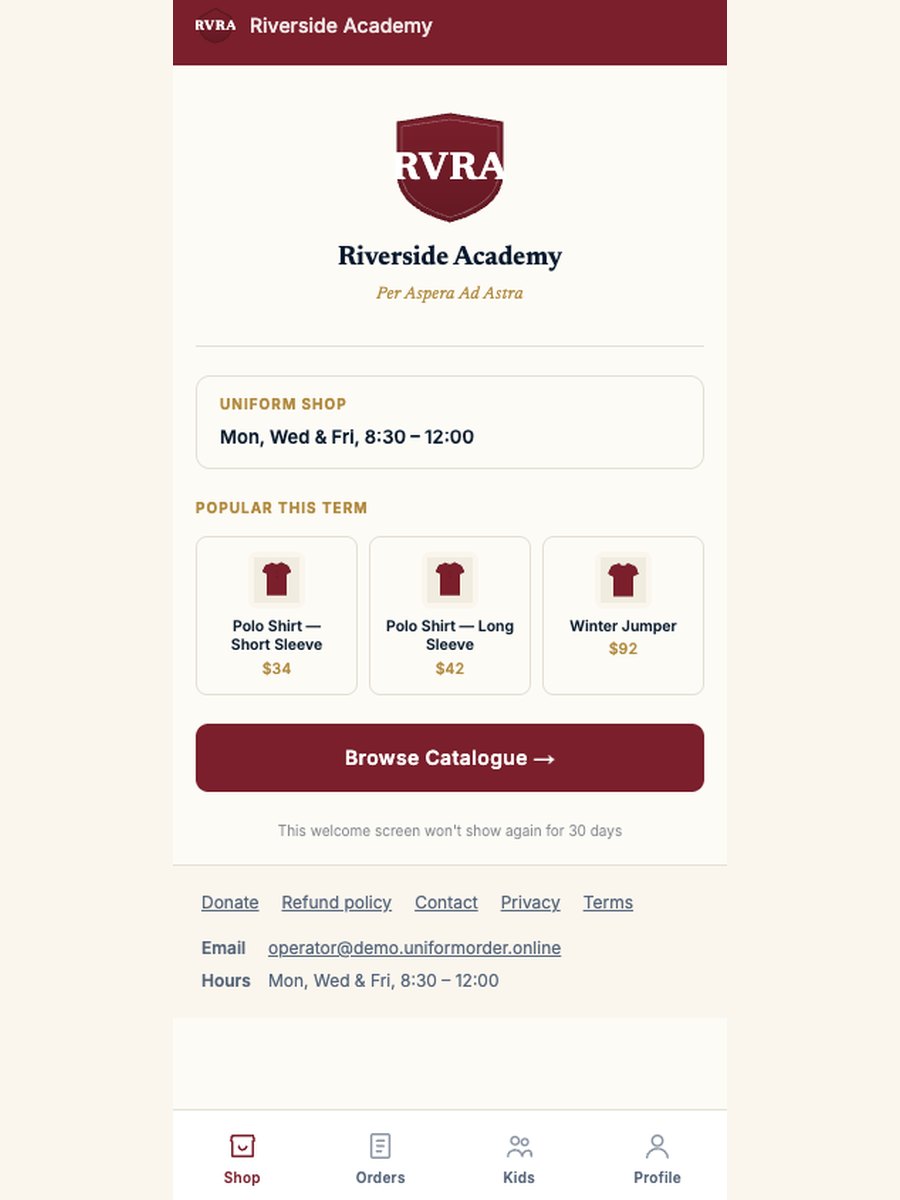
UniformOrder
Parents order school uniforms on a phone. Volunteers pack paid orders from a tablet. Card payments settle to that school's own Stripe account.
How it works
One login covers two children at two schools. The board only shows orders that are already paid. The treasurer exports a GST-aware CSV instead of rebuilding a spreadsheet.
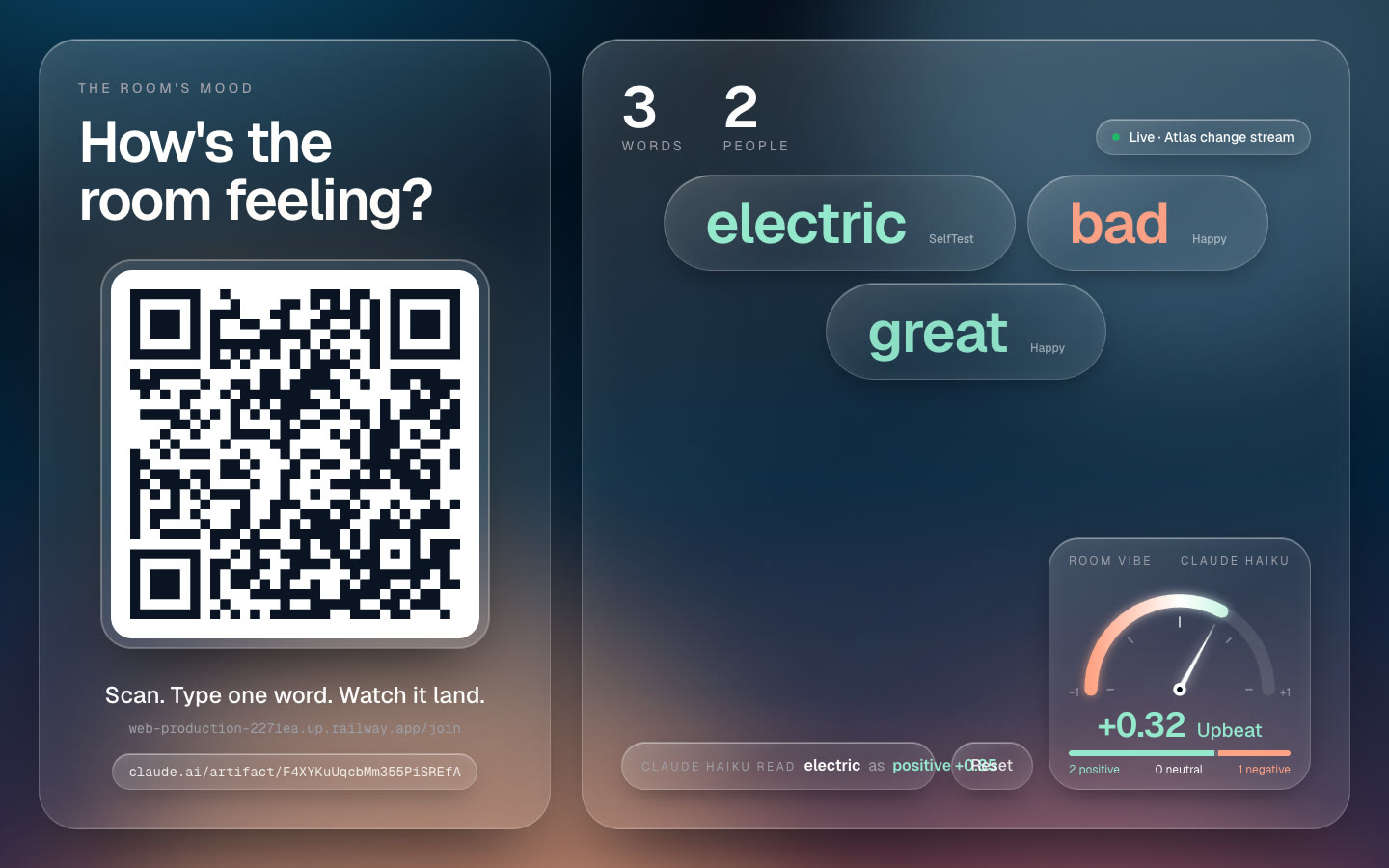
The public stage. The words were already in the room.
One evening
The room's mood
People scan a QR code, type one word, and the stage shows each word as it lands. Claude Haiku scores the room. The count and the mood gauge move without a refresh.
How it works
Two screens, shipped the same night, with no private packages. The stage is for the room. The phone screen is one name and one word.
We don't take every app. We take the ones that are hard: many moving parts, real money, live data, or AI that has to be right. If yours has stalled, or another team called it too complex, that is where we start.